
Considerations for Permanent Daylight Saving Time

This November, British Columbia will NOT be falling back an hour, but instead will observe Pacific Time (PCT).1 There are benefits for this change, including more daylight in the late afternoon and early evening, allowing for more time being spent outdoors after school and work.
However, the switch to Pacific Time means that over the winter months, the sun will rise after students have begun the school day and workers have started their jobs. People can expect darker mornings while travelling to school and work, notes BC Injury Research and Prevention Unit (BCIRPU)Director Dr. Shelina Babul.
Combined with an increase in rain all, morning visibility will be challenging. This puts pedestrians at a higher risk for a collision with a motor vehicle. In fact, ICBC reports that 42% of all crashes involving pedestrians happen during the four-month period of October to January.2
Exposure to light in the morning regulates your circadian rhythm and promotes healthy sleep-wake cycles. Drowsiness may be an issue with darker mornings, especially among children, youth, and teens, who have different sleep-wake cycles and need more sleep than adults.
“The new Pacific Time shifts darkness from the evening commute to the morning commute,” Dr. Babul said. “Safety reminders that previously applied to the afternoon rush hour traffic, now apply to the morning commute:choose well-lit routes with marked crosswalks and sidewalks when walking, and when driving, use your headlights and drive with caution and slow down during rainy weather.”
Sunrise on December 21, 2026, the shortest day of the year in each Health Authority:
- Kelowna: 8:53 AM (Interior Health)
- Prince George: 9:27 AM(Northern Health)
- Surrey: 9:03 AM (Fraser Health)
- Vancouver: 9:05 AM(Vancouver Coastal Health)
- Victoria: 9:02 AM (Island Health)
Some reminders for commuters this fall:
Be prepared:
- Ensure your vehicle’s headlights and windshield wipers are working properly.
- Teach your children the rules of the road and how to cross the street safely.
- Plan your route to and from school so that you stay on well-lit streets with dedicated crosswalks and sidewalks as much as possible.
- Try to have a consistent bedtime and wake-up so you and your family are well-rested and alert: stick to a consistent sleep schedule, plan ahead for the following morning, and enjoy time outdoors in the early evening when it is light.
Be alert:
- Allow extra time for travelling in the morning so that you arenot rushing.
- Put your phones, earbuds, and other distractions out of sight during your commute.
- Drivers: Slow down when driving on residential streets and around schools, bus stops, and crosswalks.
- Drivers: Ensure you come to a complete stop at stop signs and red lights.
- Drivers: Make eye contact with pedestrians, cyclists, and other road users, and conduct shoulder checks before proceeding through an intersection.
- Pedestrians: Stop, look, and listen before crossing theroad.
Be visible:
- Use your vehicle’s headlights in the early morning.
- Add reflective strips, clipon lights, or small flashlights to backpacks and lunch bags.
- Add reflective gear and front and rear bicycle lights. Put a headlamp on your helmet.
References
- Government of BC. BC’s new time zone (Pacific time) (September 17, 2026). Available from https://www2.gov.bc.ca/gov/content/governments/celebrating-british-columbia/daylight-saving-time
- ICBC. Pedestrian safety. Available from https://icbc.com/road-safety/sharing/pedestrian-safety
- Fraser Health. The season of darker mornings is here: Plan for safe travel and healthy routines (October 21, 2026). Available from https://www.fraserhealth.ca/news/2026/Oct/The-season-of-darker-mornings-is-here-Plan-for-safe-travel-and-healthy-routines
- Sooke SD 62. Helping students stay safe as BC moves to Permanent Daylight Saving Time(October 21, 2026). Available from https://www.sd62.bc.ca/news-events/news/helping-students-stay-safe-bc-moves-permanent-daylight-saving-time
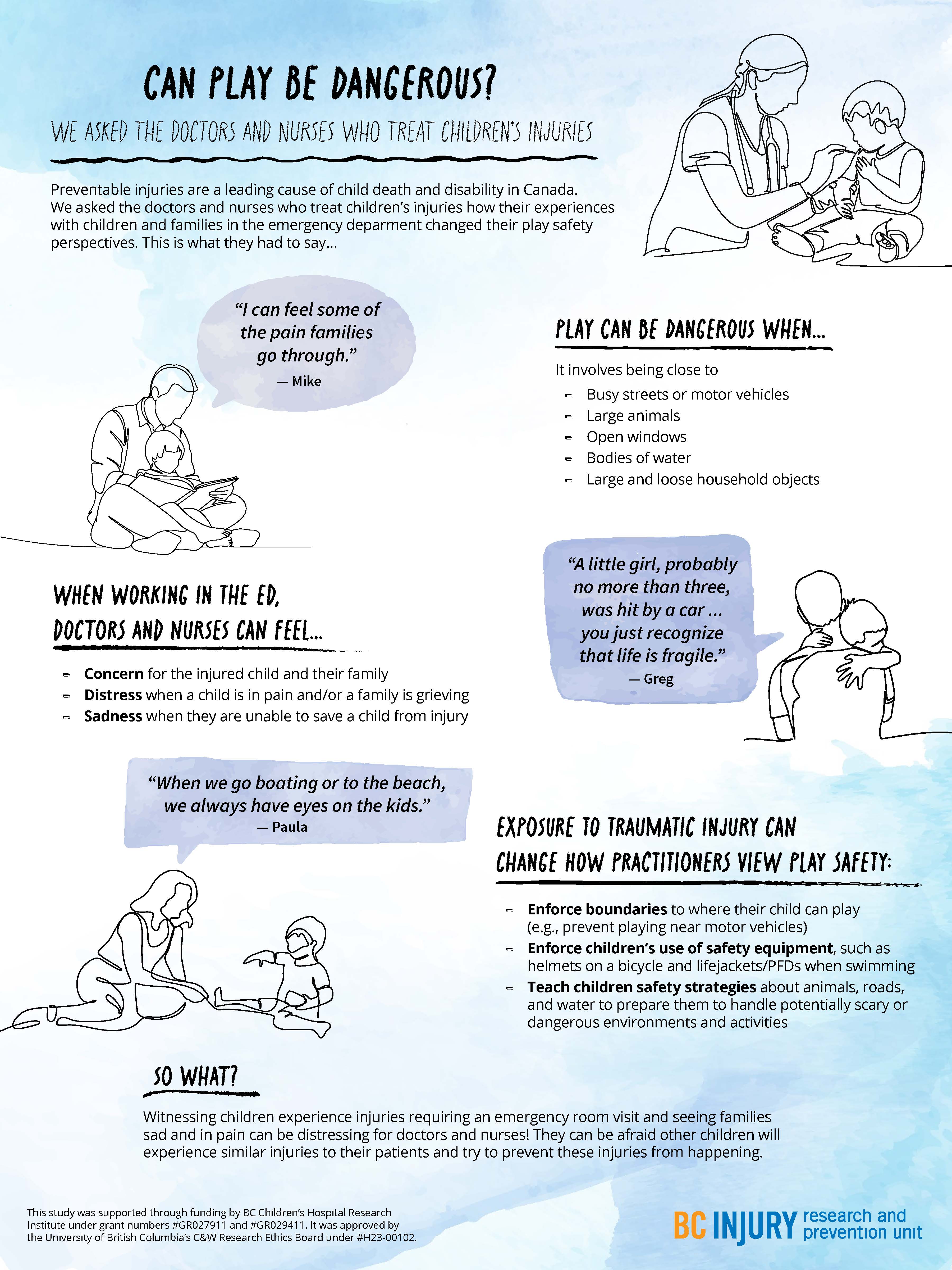
- distress when a child was in pain and when a family was grieving; and
- sadness in the event they were not able to save a child in their care.
- concern for the injured child and the child’s family;
Particularly traumatic events, such as those involving vivid sights and sounds (e.g., families holding each other and having extreme reactions), stuck with the practitioners, having long-lasting impressions on them and causing them to re-live these events in the years following their exposure.
Even after their shift was over, practitioners said that they changed how they approached parenting and how they perceived safety during play as a result of witnessing these traumatic events. They reported having more knowledge of the causes and consequences of severe injuries, such as those that require hospitalization or emergency care. For example, practitioners were more likely to enforce boundaries around where their children could play, such as by forbidding their child to play near busy streets. They also were more likely to tell their child about safe play environments and equipment, and put this equipment on their child before play, such as explaining the benefits of using helmets while riding bikes.
Practitioners were more likely to enforce boundaries around where their children could play, and use safety equipment, such as bike helmets.
Practitioners also described being concerned about their children’s play near open windows, around large bodies of water unsupervised, and in environments where firearms were present. They also expressed worry about their children’s play on trampolines and on motorized vehicles, such as ATVs. Findings related to trampoline play safety concerns were published in the journal Injury Prevention.
Observing family grief due to child injury or death affected the mental well-being of health care practitioners, drawing attention to the need for mental health supports for those involved in caring for severely injured and dying patients.

"Raise more resilient children through play...watch and see how your child handles challenging tasks without intervening right away." —Dr. Michelle Bauer
Building resilience through play
How can parents help their children build resilience? By letting them play!
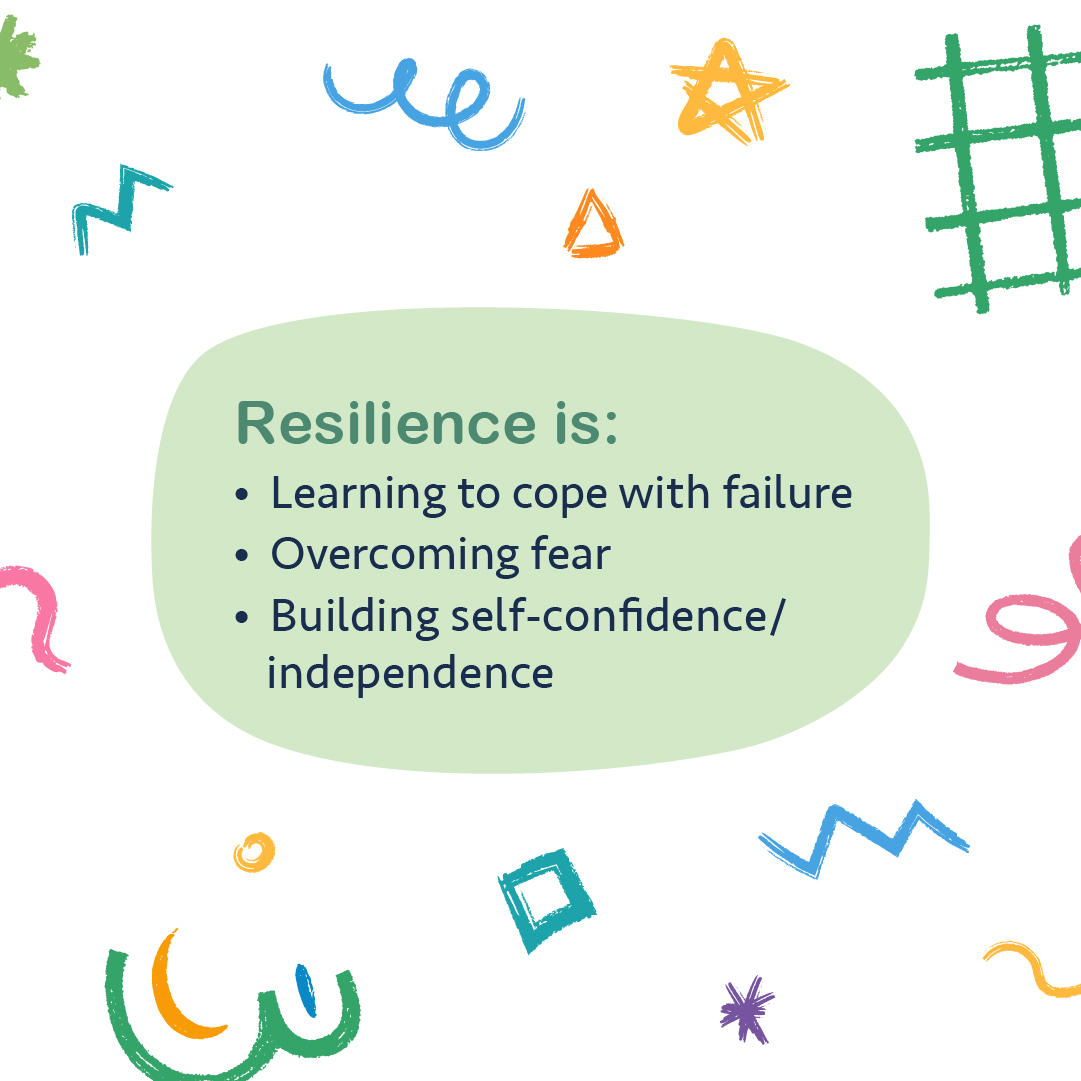
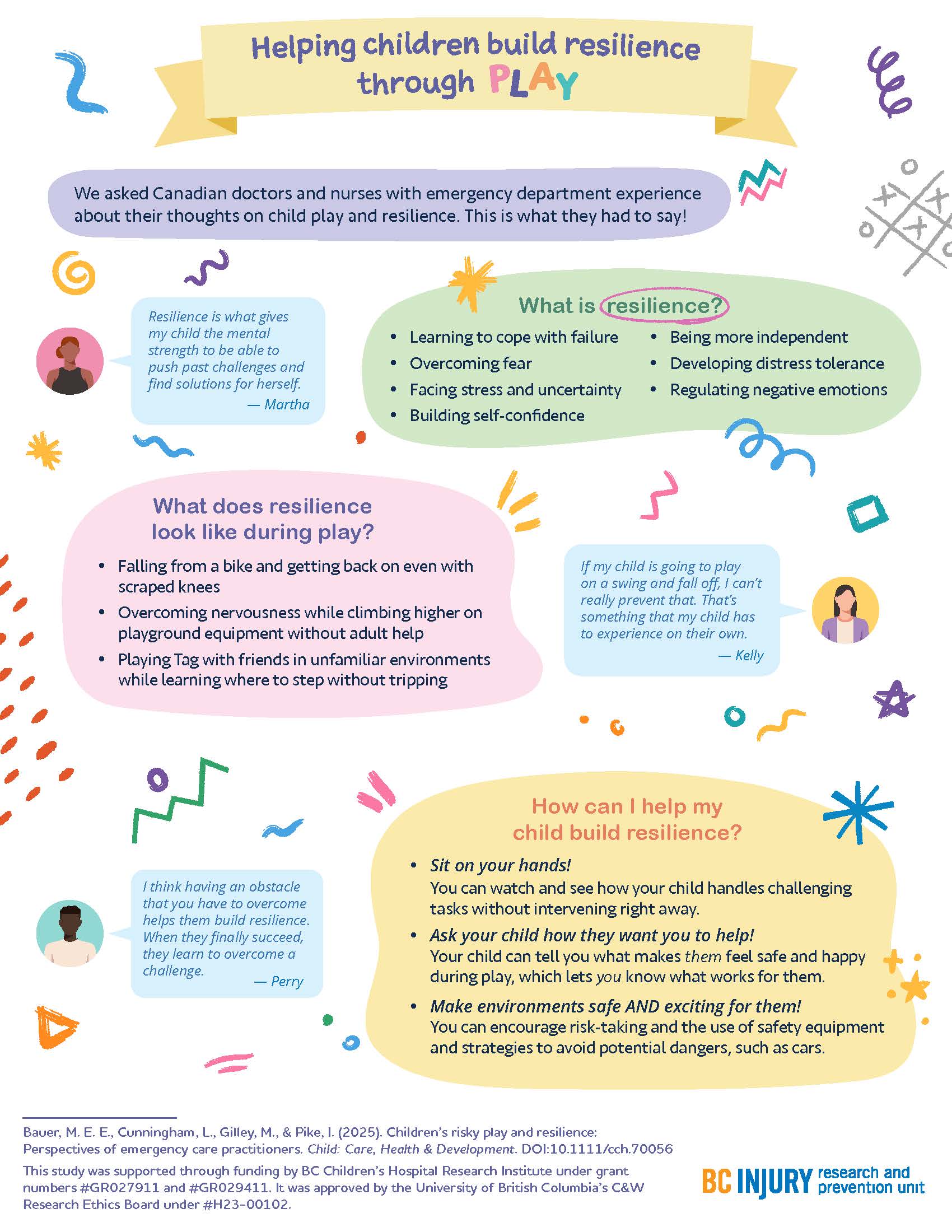
The experiences that practitioners witnessed encouraged them to support their children in building resilience through play; specifically, by supporting children in learning to cope with failure, overcome fear, build self-confidence, develop distress tolerance, and regulate negative emotions. Findings related to building resilience through play were published in the journal Child: Care, Health, and Development.
Parents fostered resilience in their kids by:
- helping their kids get back on bikes after they fell off and wanted to try again;
- sitting on their hands so they did not instinctively reach for their children when their children fell down; and
- encouraging participation in challenging and thrilling activities in forests and water while safety equipment was used.
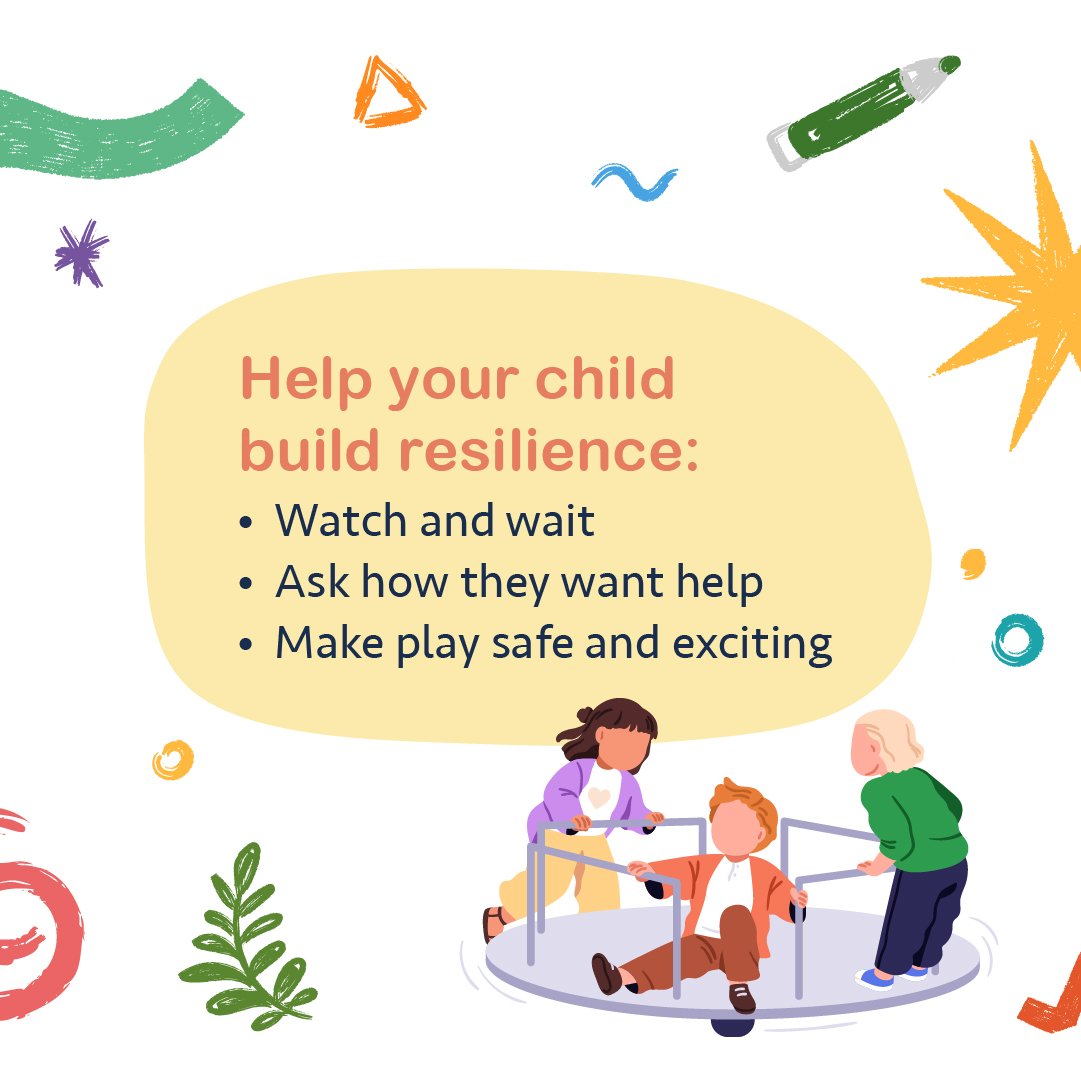
"There are a few ways that parents can raise more resilient children through play that are supported by literature and our study findings," said Dr. Bauer. "One: watch and see how your child handles challenging tasks without intervening right away."
"Two: Ask your child how they want you to help—let them tell you what makes them feel safe and happy during play. Let them lead. And three: make play both safe and exciting by encouraging risk-taking, teaching them how to avoid hazards, and using safety equipment.”
This research was supported through Drs. Bauer’s and Gilley’s receipt of a clinical and translational research seed grant from the BC Children’s Hospital Research Institute (BCCHR), Dr. Bauer’s BCCHR postdoctoral fellowship award, and additional training provided to Dr. Bauer through her participation in the Programs and Institutions Looking to Launch Academic Researchers (PILLAR) program through ENRICH, a national organization training perinatal and child health researchers.
Learn more about the study through two infographic posters:
Graphics and posters by Milica Radosavljevic


